Food manufacturing cleaning in Stockton
Cleaning and sanitation for Stockton processing rooms, packaging lines, docks and the support rooms around them, done to your plant’s procedures.
Printable checklist
Production and support areas
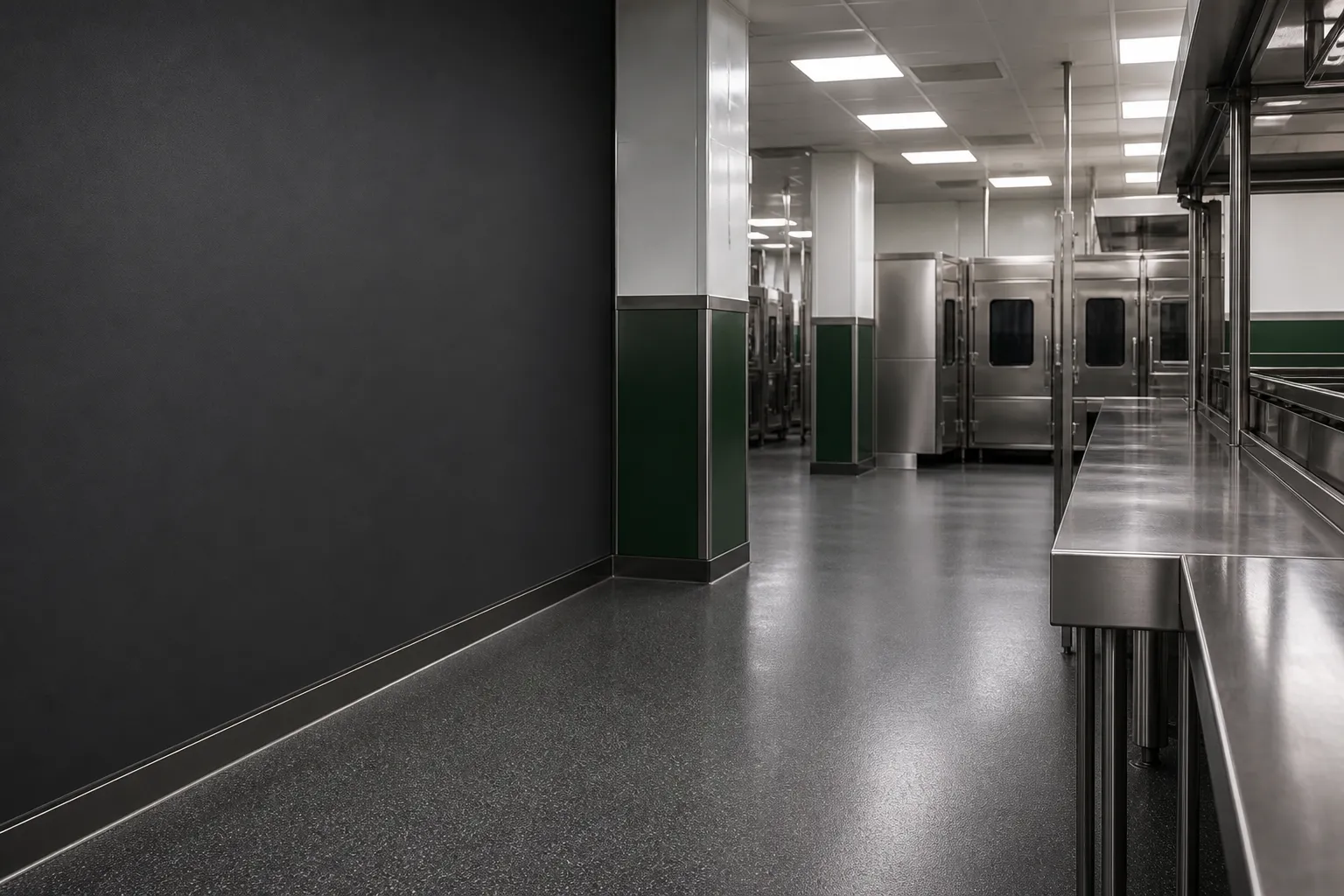
We clean processing rooms, packaging, docks and the locker rooms and breakrooms around them, following your sanitation plan. Floors, equipment exteriors and adjoining rooms each get the method their use calls for.
Food-contact and non-food-contact surfaces
Food-contact surfaces and production lines are cleaned and sanitized with the products your plan names, while equipment exteriors and the rooms around them get their own sequence.
Planned with your sanitation lead
We work inside your shutdown window and your procedures, and hand each room back on time for restart.
Products your plan approves
Cleaners and sanitizers come from your approved list, and each one stays on the surface for its full label contact time.
Room-by-room sign-off
Each room is walked with your sanitation lead before it goes back to production, so inspection starts from a finished room.
Sanitation planned with the production calendar
Sanitation in a food plant goes smoothly when it is planned with the production schedule rather than squeezed around it. The facility sets the shutdown window, and cleaning moves through the identified areas in the order its procedures define, from food-contact surfaces to equipment exteriors and the floors around them.
The rooms outside production matter too. Locker areas, breakrooms and offices can be covered through industrial facility cleaning, selected machinery outside the food-contact zone through equipment exterior cleaning, and suitable hard floors through commercial floor care. Listing them in the same request keeps the whole facility on one plan.
Areas inside a food plant, from dock to office
A food manufacturing facility in Stockton usually holds several distinct zones: raw receiving, processing rooms, packaging, storage, shipping docks, and the support side with locker rooms, breakrooms, restrooms and offices. Each one carries its own classification and task list, and the facility’s procedures say which products and sequence apply where.
Listing the zones in that order, with the surfaces in each, gives a clear picture of the work. Shipping and receiving areas connect with loading dock cleaning, and bare concrete in storage rooms or corridors can be scrubbed through the concrete floor service.
Working inside a shutdown window
A common pattern is to work from higher surfaces down toward the floor, so soil moves away from areas already cleaned. The facility’s procedures set the exact order, and each step in a room is finished before the next begins, which keeps the handoff point clear when production takes the room back.
Product changeovers and weekend shutdowns are typical windows. Sharing the production calendar ahead of time lets staffing and supplies be planned for each window rather than arranged on the day.
Support spaces between production shifts
Locker rooms, restrooms and breakrooms in a food plant see a full crew at every shift change, and they are where hygiene habits start before people walk into production. Keeping them clean and stocked on a steady schedule belongs to the plant’s routine as much as the production-room work. Front offices on the same site receive ordinary workplace cleaning.
Those rooms can be cleaned while production runs, timed to the gaps between shifts so they are ready when a new crew arrives. Restocking uses soap, paper products and other consumables we bring or that the facility supplies.
What food plant cleaning costs in Stockton
Support rooms in a food plant often price at or just below the office band, because open locker and break areas clean faster than private offices. Stockton offices cleaned five nights a week run $0.15 to $0.23 a square foot monthly as of 2026. Locker rooms, breakrooms, restrooms and offices make up that support side, while production sanitation runs on the facility’s own calendar and procedures.
Picture a plant with 9,000 square feet of support space on the plan, cleaned every weekday at $0.13: $1,170 a month. Shift changes that reset locker rooms more than once a day, surfaces sorted into food-contact and non-food-contact, and work that has to fit a shutdown window add time. The handoff back to production at the end of each cleaning is part of the schedule. Production floors and equipment exteriors join the plan as their own lines. We walk the plant with your sanitation lead before any price is set.
A few useful answers
Food manufacturing cleaning questions
Can food-contact surfaces be included?
Yes. Food-contact surfaces and production lines are cleaned and sanitized with the products and steps your sanitation plan sets.
Can offices and locker rooms be included with plant sanitation?
Yes. Offices, locker areas and breakrooms can be added so the support side of the facility is cleaned alongside the identified production spaces.
Can locker rooms be reset between shifts?
Yes. Locker rooms, restrooms and breakrooms can be cleaned and restocked in the gaps between shifts while production keeps running.
Do you provide food production facility cleaning in Stockton?
Yes. Processing rooms, packaging areas, storage and support spaces at Stockton food plants are cleaned under the facility’s own procedures and surface classifications.
Can cleaning happen during a weekend shutdown?
Yes. Weekend and changeover shutdowns are typical windows, with the start, finish and handoff times set by the facility.
Do you clean the shipping docks at a food plant?
Yes. Dock surfaces and staging areas are covered through loading dock cleaning and can be scheduled alongside plant sanitation.
Industries